
Hidden Objects - The Journey
SayGames LtdPuzzle
4.53.26K Reviews
- Version
- 1.1.36
- Installs
- 10.00M
- Age Rating
- Everyone
Screenshots
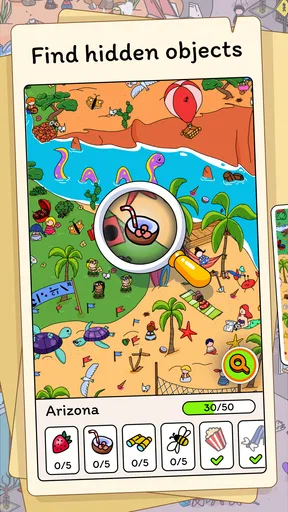
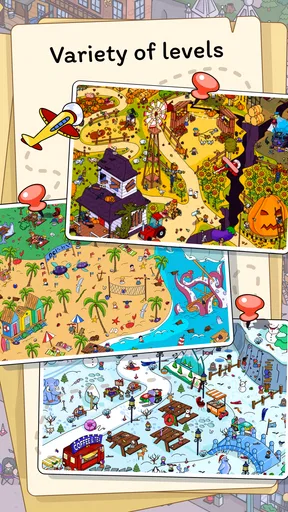
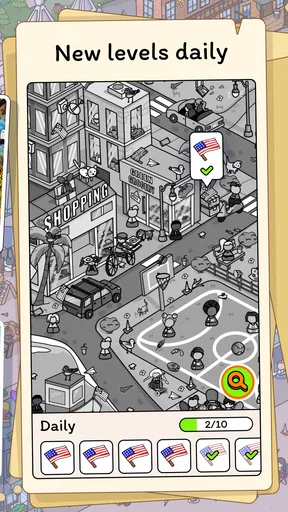
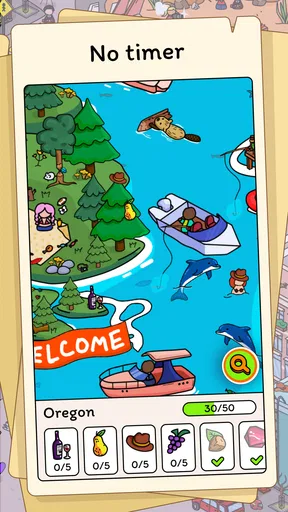
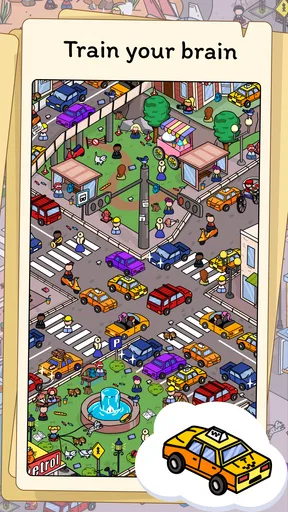
Our Review of Hidden Objects - The Journey
 Analysis by Appyee
I spent time with Hidden Objects - The Journey as a casual puzzle game, and my first impression was that it understands the appeal of a simple visual challenge. You look through illustrated scenes, search for concealed items, and rely on patience rather than reflexes. That makes it easy to start, but the better moments come when I stop scanning randomly and begin reading the picture as a collection of shapes, colors, and unlikely details.
That focus on observation is the game’s central strength. It does not ask me to learn complicated controls or remember a long story before I can enjoy a level. I can open it for a short break, settle into a more careful search, and leave after one successful scene. For anyone who likes hidden-object puzzles but wants something more approachable than a large adventure game, this is a friendly place to begin.
How the current version feels to play
The game comes from SayGames Ltd and is available as a free puzzle title for everyone. Its current version is 1.1.36, and it runs on devices using Android 8.0 or later. Those details matter if you are considering installing it on an older phone: the operating-system requirement is not especially demanding, but it is still worth checking before downloading.
In practical use, the core loop is clear. I enter a picture, study the scene, and search for the requested objects. The pleasure is not in moving a character across a map; it is in noticing what initially blends into the artwork. A small item may be hidden by a similar color, placed near other visual clutter, or drawn at an angle that makes it less obvious than its name suggests.
That design gives the game a different rhythm from match-three puzzles or word games. A match-three title usually rewards quick pattern recognition and repeated moves, while a word game depends on language and vocabulary. Here, progress depends more on visual discipline. I found myself using a deliberate sweep across the image instead of tapping wherever something looked interesting. That habit makes a bigger difference than speed.
The best way to approach a difficult scene is to divide it into zones. I usually start at the upper edge, move across in a slow line, then repeat the process lower down. This prevents the common mistake of checking the same attractive corner again and again. When an object is still missing, I change the question from “Where is the item?” to “Which part of the scene has a shape or color that does not belong?” That small shift often exposes details I had mentally filtered out.
A good fit for short, quiet play sessions
I think the game works particularly well in everyday situations where I want something engaging without a large commitment. On a lunch break, I can investigate a picture without needing sound or a long uninterrupted session. At home, it is a calmer alternative to games built around timers, rapid tapping, or competitive pressure. It also suits people who enjoy looking closely at illustrations and feel satisfied by completing a visual search.
There is a useful difference between “easy to begin” and “always easy.” The controls are simple, but the attention required can increase when objects are well integrated into the scene. That makes the game suitable for families who want a straightforward puzzle, although younger players may need help with reading an item’s name or understanding what kind of object they are meant to find. The Everyone content rating supports its broad accessibility, but the actual enjoyment will still depend on a player’s patience.
For me, the most realistic use case is a short reset after a demanding task. If I have spent too long reading messages or working through a spreadsheet, searching a picture gives my attention one focused problem instead of another stream of information. It is not a replacement for a deep game session, but it can be a pleasant mental change of pace.
What the latest state tells me about its direction
The game was released on March 5, 2023, and its current version shows that it has continued to receive version-level attention rather than remaining frozen at its launch state. I would not treat a version number alone as proof of a major redesign, though. From a reviewer’s perspective, the safer conclusion is that the title remains maintained in its present form, while the essential experience is still the hidden-object search itself.
That distinction is important for existing players. If you already enjoy the basic format, a current installation should feel familiar rather than like a completely different genre. The appeal remains tied to examining scenes and finding details, so returning users are likely to value consistency more than dramatic changes. New players can also start without learning a complicated history of systems or controls.
I prefer this kind of continuity when a puzzle game has a strong central idea. A hidden-object title can become less enjoyable if too many extra mechanics distract from the act of looking. Here, the simple premise gives the game a recognizable identity. The trade-off is that players hoping for a large narrative campaign, elaborate character development, or a broad collection of unrelated modes may find the experience narrower than expected.
The game’s popularity suggests that this focused approach has connected with a substantial audience. It has an average rating of 4.5 from around 216 thousand ratings, and it has passed 10 million installs. I read those figures as evidence of broad interest, not as a guarantee that every scene or monetization choice will suit every player. Puzzle preferences are personal, especially when the main challenge depends on visual detail and repetition.
Small techniques that make searching less frustrating
One useful technique is to search by visual category rather than by the order in which the requested items appear. If I am looking for something round, I first inspect wheels, plates, buttons, and decorations. If the target is thin, I check edges, handles, stems, and lines in the artwork. This is more reliable than reading the list repeatedly and tapping at random.
Another practical habit is to pause after finding several objects. When I rush, I tend to confirm the same areas with less care because my eyes expect the remaining item to be obvious. A short pause resets that expectation. I then inspect places where the background changes texture, where two objects overlap, or where an item’s outline is interrupted. Those are exactly the locations that casual scanning tends to miss.
I also recommend treating taps as decisions rather than guesses. On a small phone screen, accidental taps can make the search feel messy, especially when several objects sit close together. Holding the device steady and enlarging the view with the phone’s normal accessibility tools, when available, can help with tiny visual details, though the experience will naturally depend on the device. Players with eyesight difficulties should consider screen size before committing to long sessions.
A final tip is to stop before frustration turns into blind tapping. If I have searched a scene several times without progress, taking a break is usually more effective than continuing immediately. Returning with fresh attention changes what stands out. This is a game where persistence helps, but stubborn repetition without a new method usually does not.
Where the free model affects the experience
The game is free to download, but it includes in-app purchases ranging from $0.99 to $99.99 per item. That wide range is something I would want to keep in mind before handing the phone to a child or allowing unrestricted purchases. A free entry point is convenient, yet the presence of optional spending means the overall experience should be approached with the same care as other free-to-play games.
For a player who is comfortable enjoying a game without buying anything, the important question is whether the basic search loop remains satisfying on its own. In my view, the answer depends on how much repetition you tolerate and how strongly you want uninterrupted progress. Someone who enjoys slowly solving scenes may be perfectly happy treating the game as a casual pastime. Someone who dislikes purchase prompts or any pressure around progression may prefer a paid puzzle with a single upfront cost.
This is also where it differs from traditional hidden-object games purchased once. A one-time paid alternative may offer a more predictable relationship between price and content, while a free title is easier to try and easier to abandon if the style is not right. I would choose this game when I want low-commitment access first. I would choose a conventional paid option when I already know I want a longer, uninterrupted search experience.
Parents should make the purchasing decision before a child starts playing. The Everyone rating makes the content broadly approachable, but age suitability and spending control are separate issues. I would set the device’s purchase protections in advance and explain that tapping an attractive option is not the same as earning it through the puzzle.
Who should choose it, and who should skip it
I would recommend it to players who like visual scavenger hunts, illustrated scenes, and puzzles that reward patience. It is also a good choice for someone who finds action games tiring but still wants a task that keeps the mind occupied. People who enjoy noticing background details in artwork may get more from it than players who treat every game as a race.
I would be more cautious about recommending it to anyone who needs strong narrative motivation. The search itself is the reason to continue, so players looking for dialogue, character progression, or strategic planning should look elsewhere. It may also disappoint people who prefer puzzles with a clear logical deduction, since recognizing a hidden object is a different skill from solving a sequence of clues.
Players with limited patience for repeated visual scanning should try it only if they are willing to slow down. The game is not at its best when played while distracted. A crowded commute, a dim screen, or a very small display can turn a relaxing search into an exercise in squinting. In those circumstances, an audio-led puzzle, a word game, or a more spacious logic title may be a better fit.
What still feels limited
The focused design is both the reason to play and the main limitation. Once I understand the search routine, the experience can feel familiar because the fundamental action does not change: inspect, identify, and tap. That is not a flaw for a short-session player, but it can become repetitive for someone who wants constant mechanical variety.
Visual clarity is another important consideration. Hidden-object puzzles need a careful balance: the targets should be concealed enough to make discovery rewarding, but not so well blended that the result feels arbitrary. When a scene is readable, I feel that my attention earned the solution. When details are too similar, I can start doubting whether I missed something or simply need to keep tapping. The game is strongest when it challenges observation without making the artwork feel muddy.
The free-to-play structure may add another layer of friction for users who want a completely uninterrupted experience. I would not install it expecting the same simplicity as a paid offline puzzle. Instead, I would treat it as an accessible way to sample the genre and decide whether its particular visual style and progression suit me.
There is also a practical difference between playing on a tablet and playing on a compact phone. A larger screen can make detailed scenes more comfortable to inspect, while a phone is better for spontaneous sessions. If I were choosing a device specifically for this game, I would favor screen comfort over raw performance. The challenge is visual, so display size and brightness have a more direct effect on enjoyment than advanced hardware.
What I would watch as the game evolves
Because the current version is 1.1.36, I would watch future updates for changes that improve clarity without weakening the search. Helpful evolution would include more varied scene design, better balance between obvious and subtle targets, and smoother handling of difficult moments. I would be less interested in additions that bury the central puzzle under unrelated systems.
I would also pay attention to how the free model develops. The best outcome for players would be a clear separation between optional purchases and the satisfaction of solving scenes independently. If the game keeps its entry barrier low while respecting players who do not spend, it can remain a comfortable recommendation for casual puzzle fans.
For existing users, the main thing to watch is whether new content preserves the feeling that careful observation matters. A hidden-object game can lose its charm if solutions become too dependent on random tapping or if visual clutter replaces thoughtful concealment. The current identity is strongest when I can look back at a completed scene and understand why the object was difficult to notice.
My recommendation after playing
Hidden Objects - The Journey is an easy game to recommend when you want a calm visual puzzle rather than a demanding adventure. I like that its central idea is immediately understandable, yet the better scenes reward a methodical approach instead of careless tapping. The ability to play in short bursts makes it practical for everyday use, and the broad age rating makes it approachable for a wide range of players.
I would not present it as the definitive choice for every puzzle fan. Its free-to-play purchases, focused gameplay, and dependence on visual concentration may bother people who want a single-price experience, dramatic variety, or more formal logic problems. Still, if you enjoy searching illustrations and taking satisfaction in spotting what everyone else might overlook, it offers a pleasant way to spend a few quiet minutes.
My advice is to begin with modest expectations: install it as a casual search game, use a systematic scanning method, and decide for yourself whether the scene design keeps you interested. If it does, the simplicity becomes a strength. If you need a deeper campaign or dislike monetized mobile games, a paid hidden-object alternative will probably serve you better. For the right player, though, this is a patient observation game that works best when you slow down.
Verdict
Strengths of Hidden Objects - The Journey
- Relaxing gameplay suitable for short, casual sessions.
- Large variety of scenes keeps the hidden-object format engaging.
- Helpful hints make difficult searches less frustrating.
- Simple controls are comfortable on phones and tablets.
- Works well for players who enjoy visual puzzles and exploration.
Limitations of Hidden Objects - The Journey
- Some scenes may feel repetitive after extended play.
- Small objects can be difficult to spot on smaller screens.
- Hints or extra attempts may be limited without in-game resources.
- Difficulty can vary noticeably between different scenes.
- Progress may feel slow for players seeking fast-paced gameplay.
Other Releases by SayGames Ltd
View All
Turbo Stars - Rival Racing
Racing4.6

Johnny Trigger: Action Shooter
Action4.6

DOP 4: Draw One Part
Puzzle4.4

DOP: Draw One Part
Puzzle4.4
Similar Picks in This Category
View All
Block Blast!
HungryStudio4.8

Braindom: Brain Games Test
Lahana Game Studio4.6

AMAZE!
CrazyLabs LTD4.6

Sudoku - Classic Sudoku Puzzle
Oakever Games4.7

Art Puzzle - Puzzle Games
Easybrain4.8

Amaze GO!
Oakever Games4.9
Frequently Asked Questions
What is Hidden Objects - The Journey?
Hidden Objects - The Journey is a casual puzzle game built around finding carefully concealed items in illustrated scenes. Each level presents a different location or themed environment, and your goal is to identify the requested objects within the scene. The game is designed for relaxed, observation-based play, making it suitable for short sessions as well as longer puzzle-solving breaks.
How do you play Hidden Objects - The Journey?
Gameplay is straightforward: examine the scene, compare it with the list of objects you need to find, and tap each item when you spot it. Some objects can blend into the background, so patience and careful scanning are important. Depending on the level, hints or other assistance may be available if you become stuck, although using help can affect the challenge and progression experience.
Is Hidden Objects - The Journey free to download and play?
The game can generally be downloaded without an upfront purchase, but the exact monetization model may depend on the version available for your Android or iOS device. Free versions of hidden-object games commonly include advertising, optional purchases, or limits on certain hints and bonuses. Review the store listing before installing to confirm whether ads, in-app purchases, or premium content are included.
Can Hidden Objects - The Journey be played offline?
Many hidden-object levels may work without a continuous internet connection after the required game data has been installed. However, features such as advertisements, cloud saving, updates, special events, or purchases may require access to the internet. If offline play is important to you, test the game in airplane mode after installation, since offline availability can vary between versions and devices.
Is Hidden Objects - The Journey suitable for children and casual players?
Hidden Objects - The Journey is generally approachable because its controls are simple and the main activity involves observation rather than complex instructions. It can appeal to children, adults, and casual players who enjoy visual puzzles, although parents should check the age rating and privacy information before allowing younger users to play. Also consider advertisements, optional purchases, and the difficulty of later scenes.
Play our best games!


